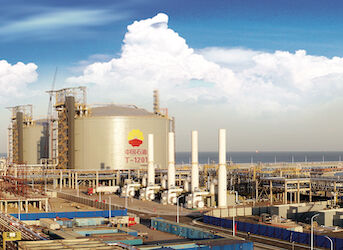
Tangshan LNG project is the first LNG project in North China. The receiving station of this project mainly consists of 4 LNG full capacity storage tanks with a storage of 160,000 cubic meters and their supporting structures. The site is treated by dynamic compaction. The grouting reinforced concrete bored pile at the end of pile is adopted for pile foundation. The foundation treatment started on September 10, 2009 and was completed on February 25, 2010. The bored pile started on May 20, 2010 and was completed on December 04, 2010.

Foundation dynamic compaction: tamping energy is 2000KN.m to 12000KN.m; after treatment, the
foundation bearing capacity reaches 120-250k,a, and the foundation treatment area is 331243m2.
Bored pile: The pile diameter is 1.20m, the pile length is 70m, and the construction technology of
rotary digging hole pile is adopted. The high-cap piles are exposed to the ground by 1.7-2.0m, and the
above-ground piles adopt traditional secondary pouring technology. The two storage tanks total 720,
with a concrete volume of 63000m3.
Tank #1: low strain testing, 98.6% of type I piles, 1.4% of type II piles; ultrasonic testing,
100% of type I piles. The limit value of the vertical compressive bearing capacity of a single pile
meets the design requirements. Tank 3#: low strain testing, 97.5% of type I piles, 2.5% of type II
piles, ultrasonic testing, 100% of type I piles. The ultimate value of the vertical compressive
bearing capacity of the four engineering piles meets the design requirements.
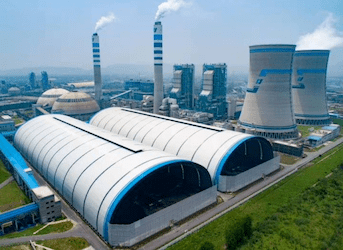
The project is a joint venture between China Huadian Group and Jiangsu Electric Power Development Co., LTD., with a planned capacity of 4×1000MW USC (Ultra-Supercritical) generating units, of which Units 1# and 2# were constructed during this phase. Construction began in September 2010 and was successfully completed in October 2013.
“Large-for-Small Replacement” refers to the process of replacing small, inefficient coal-fired power units with larger, advanced, and environmentally friendly units. This approach improves energy efficiency, reduces emissions, and optimizes power generation capacity by phasing out outdated units.
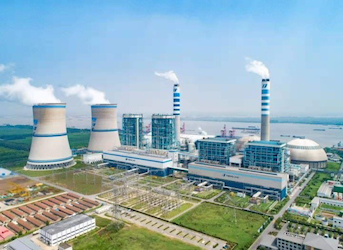
This project marked a significant achievement with the successful application of long-spindle-dug bored piles in the thick silt layer of the Yangtze River basin. The extensive use of high-strength prestressed PHC pipe piles for the circular coal yard foundation further showcased advanced engineering practices. The project was awarded the 2014-2015 National Quality Engineering Award and the 2015 China Electric Power Quality Engineering Award for its outstanding performance.